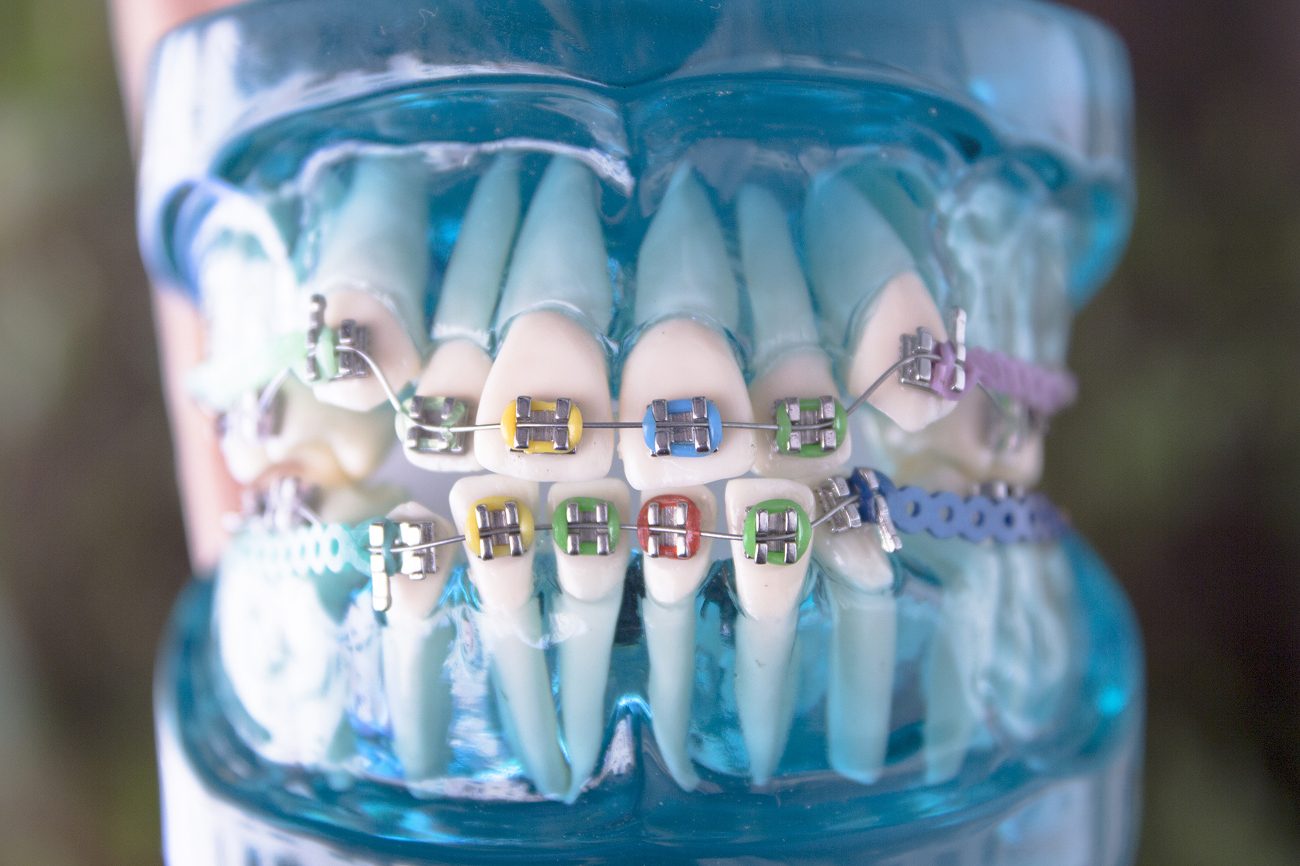
Types of Braces
Braces work by applying consistent, controlled pressure to the teeth over time — gradually moving them into the positions your doctor has planned. What varies between systems is how that pressure is applied, how the hardware looks, and what makes each option the right fit for a particular patient and lifestyle.
At Doyle Orthodontics, we offer three types of braces. During your consultation, we’ll walk through the options that make sense for your case, your priorities, and your goals. There is no one-size-fits-all answer — and because our doctors take the time to understand both the clinical picture and what matters most to you, the recommendation you receive will be one we can genuinely stand behind.
Traditional Metal Braces
Traditional metal braces are the most time-tested system in orthodontics, and for good reason — they are exceptionally effective across a wide range of cases, from simple crowding to complex bite correction that requires precise, controlled movement over an extended treatment period.
Modern metal braces are considerably smaller and more comfortable than the hardware most parents remember from their own childhoods. Stainless steel brackets are bonded directly to the teeth and connected by an archwire that guides movement over the course of treatment. At each adjustment appointment, we fine-tune the tension in the wire to keep progress on track.
For kids and teens especially, traditional braces offer a reliable, durable option that doesn’t depend on the patient remembering to wear or remove anything. They’re also the system that gives our doctors the most direct control over tooth movement, which matters in cases that require a high level of precision. Whether your child’s case is straightforward or complex, metal braces remain one of the most capable tools we have.
Clear Braces
Clear braces work the same way traditional metal braces do — brackets bonded to the teeth, connected by an archwire — but the brackets are made from a tooth-colored ceramic material that blends with the natural shade of the teeth. For patients who want the clinical reliability of fixed braces with a less noticeable appearance, clear braces offer a meaningful middle ground.
They’re a particularly popular choice among teens and adults who are conscious of how braces look but whose cases are better suited to fixed appliances than to removable aligners. Because the mechanics are essentially the same as metal braces, they carry no significant clinical trade-offs — your doctor can apply the same level of control and precision regardless of which bracket material you choose.
One practical note: ceramic brackets can be more prone to staining from certain foods and beverages than metal, so we’ll talk through what to expect and how to keep them looking their best throughout treatment.
Self-Ligating Braces
In a traditional braces system, small elastic ties hold the archwire in place against each bracket. Self-ligating braces replace those ties with a built-in clip or door mechanism on the bracket itself — a design that reduces friction between the wire and the bracket as the teeth move.
That reduction in friction has a few practical benefits. Appointments tend to be faster, since there are no ties to remove and replace. Some patients find the overall feel gentler, particularly in the early stages of treatment. And because the wire moves more freely through the bracket, self-ligating systems can work well for certain tooth movement patterns.
Like all the systems we offer, self-ligating braces are appropriate for a range of case types. Whether this is the right choice for a given patient depends on the specifics of the case and the treatment plan — something we evaluate carefully for every person we see.

Braces For Kids
The question we hear most often from parents isn’t “does my child need braces?” — it’s “how do I know when it’s time?” The American Association of Orthodontists recommends that children have their first orthodontic evaluation by age seven. At that age, most kids still have a mix of baby and permanent teeth, which is exactly the point. Early evaluation isn’t about rushing into treatment — it’s about having enough information to make the right call at the right time.
In most cases, we’ll determine that your child simply needs to be monitored as they grow, and we’ll see them periodically to track how things are developing. When early treatment is recommended, it’s because there’s a specific problem that is genuinely easier to address now than later — things like significant crowding, a narrow palate, a crossbite, or a jaw discrepancy that responds better to intervention while the bones are still growing. Treating these issues at the right developmental window can reduce the complexity of treatment down the road, and in some cases eliminate the need for more involved intervention altogether.
When it is time for braces, kids typically do well with traditional metal braces — a durable, reliable system that doesn’t require remembering to remove or replace anything. Our team works hard to make sure every appointment feels calm and unhurried for younger patients. For many kids, this is their first ongoing relationship with a healthcare provider outside of their pediatrician, and we take that seriously.

Braces For Teens
For most teenagers, braces are a rite of passage — but that doesn’t mean the experience has to feel like one. The teenage years are also the most common time for orthodontic treatment, and for good reason: the permanent teeth have typically fully come in, the jaw is still developing, and the biology is working in your favor.
What varies a lot at this stage is what matters to the individual patient. Some teens want the most discreet option available. Others genuinely don’t mind — or even enjoy — the look of traditional braces, complete with colored ties at each adjustment. We offer all three braces systems for teens, and we’ll help you think through which option fits the case, the lifestyle, and the priorities of the person actually wearing them.
One thing we want every teen patient to understand: your cooperation matters. Braces only work as well as the care that goes into them. That means attending appointments, following guidance on foods to avoid, and keeping up with oral hygiene throughout treatment. Our doctors and team will give you every tool you need, but the results are genuinely a partnership. Teens who are engaged in their own treatment tend to finish on time with the outcomes they were hoping for — and that’s a pattern we’ve seen consistently over decades of caring for patients in this community.
For teens with complex bite issues, jaw development concerns, or cases that may eventually involve surgical coordination, we have the clinical depth to manage that care from start to finish. You won’t be referred somewhere else partway through treatment.

Braces For Adults
There is no age limit on orthodontic treatment, and adults make up a meaningful portion of the patients we see at Doyle Orthodontics. Some are finishing treatment they never had as kids. Others have noticed shifting that’s happened gradually over the years. Many are here because a dentist or oral surgeon has recommended orthodontic correction as part of a larger restorative plan — and some are dealing with bite problems or jaw discomfort that has finally become significant enough to address.
Whatever brings an adult patient through our door, the approach is the same as it is for every other patient: a thorough evaluation, CBCT imaging, and a treatment plan that accounts for the full picture — not just the alignment of the front teeth. Adults often have more complex starting points than adolescent patients. Bone is less responsive than it is in a growing jaw, prior dental work needs to be accounted for, and the goals of treatment frequently go beyond aesthetics. We’re experienced in coordinating with general dentists, periodontists, oral surgeons, and restorative specialists to make sure orthodontic care fits properly within a larger plan.
All three braces systems are available to adult patients. Clear braces are a popular choice for adults who prefer a less visible option while still benefiting from the precision of fixed appliances. Self-ligating systems can also work well depending on the specifics of the case. We’ll walk through the options at your consultation and give you a straightforward recommendation based on your clinical needs and what you’re hoping to achieve.
Adults also tend to have more questions going into treatment — about what to expect, how long it will take, and what happens after. We welcome that. An informed patient is a better partner in their own care, and we’d rather take the time to answer every question at the outset than have someone three months into treatment wondering what comes next.