
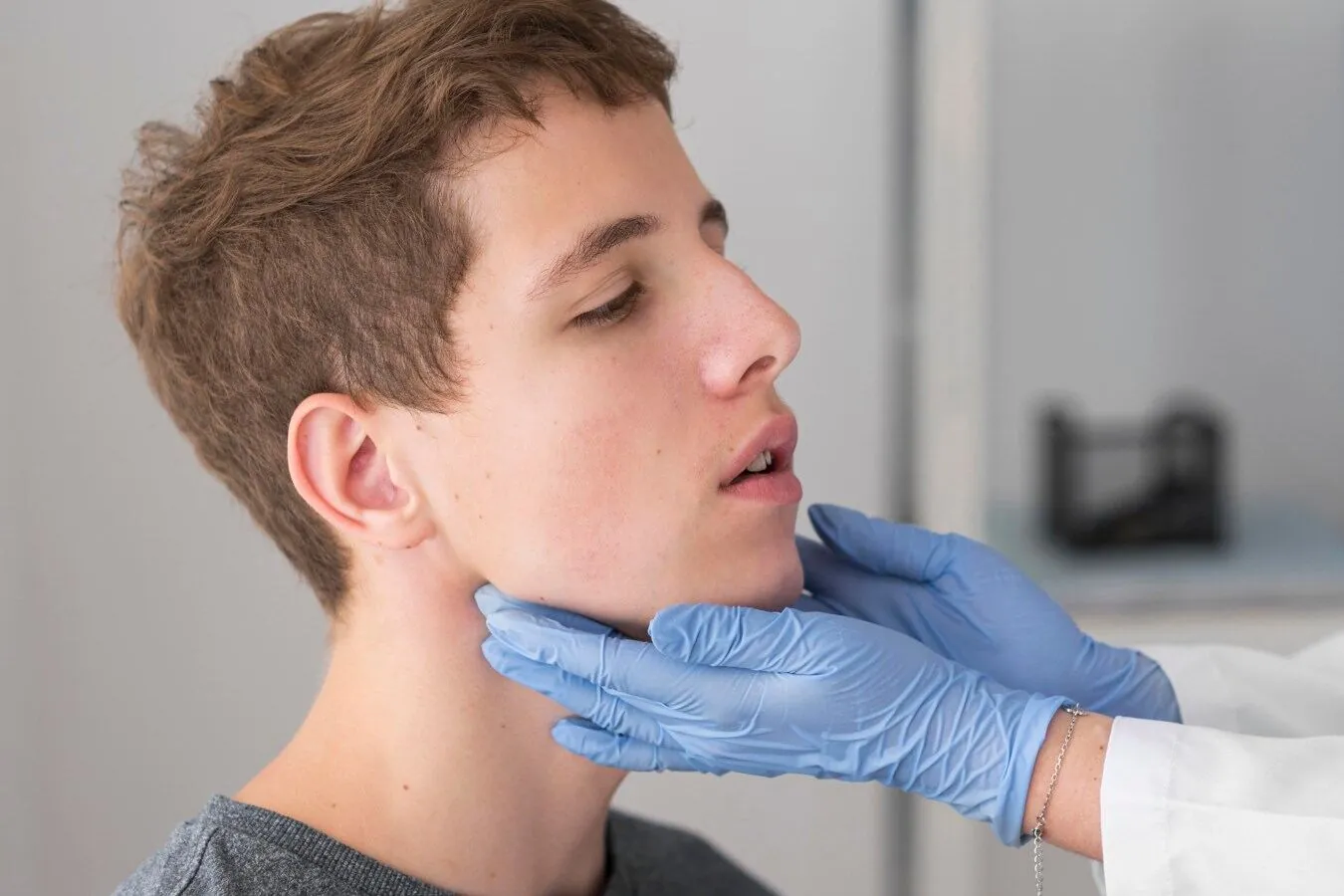
TMD Therapy
The temporomandibular joints — the two hinge points that connect your lower jaw to your skull — are among the most complex joints in the body. They move in multiple directions simultaneously, absorb significant force with every bite and chew, and are closely connected to the surrounding muscles, nerves, and teeth. When something disrupts that system, the effects can be wide-ranging and, for many patients, difficult to trace back to their source.
TMD, or temporomandibular disorder, is a broad term for dysfunction affecting the jaw joints and the muscles that control jaw movement. Patients with TMD often describe jaw pain or stiffness, clicking or popping when opening or closing the mouth, headaches — particularly in the morning — ear pain or fullness, and difficulty opening the mouth fully or comfortably. Many have been managing these symptoms for years before connecting them to the jaw.
At Doyle Orthodontics, TMD evaluation and therapy are a core part of what we do — not a peripheral service. Our diagnostic approach begins with CBCT imaging, which allows us to evaluate the position and condition of the temporomandibular joints in three dimensions. Combined with a thorough clinical examination and articulated models on a jaw-motion simulator to assess how the bite functions throughout the full arc of jaw movement, we build a picture of the joint and muscle system that most practices simply aren’t equipped to capture.
Treatment varies significantly depending on the underlying cause and the severity of the dysfunction. For some patients, the priority is relieving muscle tension and repositioning the jaw through a carefully designed oral appliance. For others, orthodontic correction of the bite is an important component of long-term relief. For more complex cases, we coordinate with oral surgeons and other specialists to develop a comprehensive management plan.
TMD is frequently undertreated because it is frequently misunderstood — both by patients and by providers who are not trained to evaluate it thoroughly. If you have been dealing with jaw pain, chronic headaches, or bite discomfort without a clear explanation, a thorough evaluation with our team is a meaningful first step.

Two-Phase Treatment
Two-phase orthodontic treatment is an approach that divides care into two distinct phases separated by an evaluation period — typically one phase during early childhood while the jaw is still actively developing, and a second phase of comprehensive treatment once the permanent teeth have fully come in. It is not recommended for every child, but for the patients who need it, starting at the right developmental window can change the entire course of their orthodontic care.
Phase One treatment, often called interceptive orthodontics, is typically carried out between the ages of seven and ten. The goal is not to straighten teeth — most of the permanent teeth haven’t come in yet. The goal is to address specific skeletal or developmental problems that are genuinely easier, and sometimes only possible, to correct while the bones are still growing and responding. A narrow upper palate that is causing a crossbite, a significant jaw discrepancy that is affecting how the face is developing, or severely crowded conditions that will eventually displace permanent teeth — these are the kinds of problems that Phase One treatment is designed to address at the source.
After Phase One, patients enter the evaluation period during which the remaining permanent teeth are allowed to erupt. We monitor this phase carefully, watching for anything that needs attention before Phase Two begins. When the time is right, Phase Two — comprehensive orthodontic treatment using braces or aligners — addresses the full alignment of the permanent dentition and the final bite relationship.
Not every child who visits us early needs two-phase treatment. In fact, most don’t. But recommending early treatment only when it is genuinely indicated — and being clear with families when it isn’t — is part of what it means to practice with integrity. At your child’s early evaluation, we’ll tell you honestly what we see and what, if anything, we recommend doing about it right now versus monitoring over time.
Orthognathic Surgery
Orthodontic treatment moves teeth. Orthognathic surgery moves the bones that hold them. For patients whose bite problems originate in the underlying jaw structure — rather than in the position of the teeth alone — surgery may be the only way to achieve both a functional bite and a balanced facial profile that orthodontics alone cannot produce.
Orthognathic surgery addresses significant discrepancies in the size or position of the upper jaw, the lower jaw, or both. Patients who may be candidates often present with a severe underbite or overbite, an open bite where the front teeth don’t meet when the back teeth are closed, or a jaw asymmetry affecting both function and appearance. Many have been told at some point that their bite is “too complex for braces” without being given a clear picture of what a complete solution would actually look like. Orthognathic surgery, coordinated properly with orthodontic treatment, is often that solution.
The process involves three stages. Pre-surgical orthodontics aligns the teeth within each jaw so that they will fit together correctly once the jaws are repositioned. Jaw surgery is then performed by an oral and maxillofacial surgeon. A period of post-surgical orthodontics fine-tunes the bite and finalizes the result. Throughout all three stages, our doctors remain the primary coordinators of your orthodontic care, working in close communication with the surgical team.
At Doyle Orthodontics, orthognathic cases are not uncommon. Our use of CBCT imaging and articulated jaw-motion simulation means we are evaluating the structural and functional dimensions of these cases with the same tools the surgical team relies on. Patients who come to us for surgical coordination can expect a team that has managed this process many times — one that communicates clearly, plans precisely, and understands what a good outcome actually requires across every phase of treatment.
Multi-Disciplinary Care
Orthodontics rarely happens in isolation. For a meaningful portion of the patients we see — particularly adults, patients with significant dental histories, and anyone presenting with health concerns that intersect with the structure of the mouth and jaw — the best orthodontic outcome depends on close coordination with other dental and medical providers. At Doyle Orthodontics, that kind of collaboration is a routine part of how we practice, not an exception.
We maintain working relationships with specialists across a range of disciplines, and our team is experienced in developing treatment plans that account for the broader clinical picture — not just what we’re doing with the teeth and bite. For patients navigating complex care, that coordination is what makes the difference between an orthodontic result that looks good on its own and one that holds up as part of a complete, well-integrated treatment plan.
Dental and Medical Specialties
Orthodontic treatment touches nearly every other discipline in dentistry, and some outside it. We work regularly with oral and maxillofacial surgeons for surgical cases and complex extractions, with periodontists where gum and bone health need to be addressed before or during orthodontic movement, with restorative and prosthodontic specialists coordinating space for implants or preparing teeth for crowns and veneers, and with pediatric dentists managing developing patients through early and comprehensive treatment phases.
On the medical side, cases involving airway, sleep-disordered breathing, or craniofacial development may involve collaboration with ENT specialists, sleep medicine physicians, or pediatricians. Our diagnostic foundation — particularly the three-dimensional information provided by CBCT imaging — gives every specialist involved in a patient’s care access to the same detailed picture of the anatomy, which makes that coordination more precise and more productive than it would be otherwise.
Management of Airway
The relationship between orthodontics and airway is an area of growing clinical attention, and one that has long been part of how we evaluate and treat patients here. The position and development of the jaws, the width of the palate, the posture of the tongue, and the overall anatomy of the oral and nasal passages all influence how effectively a patient breathes — especially during sleep.
In children, airway concerns can present as mouth breathing, poor sleep quality, behavioral issues, or difficulties with attention and focus that are sometimes mistaken for other causes. In adults, orthodontic and jaw-related factors can contribute to or worsen obstructive sleep apnea. For both populations, early identification of airway-related concerns creates treatment options that simply aren’t available if the issue goes unaddressed.
Our CBCT imaging includes the information needed to evaluate airway dimensions as part of a patient’s initial workup. Where concerns are identified, we work with ENT specialists and sleep medicine physicians to determine whether orthodontic intervention, jaw expansion, or other structural treatment is appropriate — and how it fits within the patient’s broader care plan.
Periodontal Disease
Moving teeth through bone requires that the bone be healthy. When a patient has active periodontal disease — infection and inflammation affecting the gum tissue and the bone supporting the teeth — orthodontic treatment cannot safely begin until that condition is stabilized. Beginning treatment on a compromised foundation risks accelerating bone loss and producing outcomes that don’t last.
For patients with a history of periodontal disease, or those who present with signs of active disease at their initial evaluation, we work directly with periodontists to establish the sequence of care. In some cases, periodontal treatment comes first, and orthodontics follows once the tissue and bone are stable. In others, orthodontic treatment can improve conditions for long-term periodontal health by correcting crowding that makes effective oral hygiene difficult or by redistributing bite forces that have been contributing to localized bone stress.
Throughout orthodontic treatment, we monitor the periodontal condition of patients with known histories and maintain communication with their periodontist to ensure that the timing and pace of tooth movement remain appropriate for the health of the supporting structures.
Cosmetic Restorations
For patients planning significant restorative work — implants to replace missing teeth, crowns, veneers, or other reconstructive dentistry — the sequence in which orthodontic and restorative treatment happens matters considerably. In most cases, orthodontic treatment comes first, for a straightforward reason: moving teeth after restorations are in place is significantly more difficult, and in some cases, not possible. Getting the alignment and spacing right before the restorative work is placed gives the dentist a better canvas and produces a result that integrates cleanly across the full smile.
We work closely with restorative dentists and prosthodontists to plan cases where the two disciplines overlap. This includes creating the right amount of space for an implant where a tooth is missing, aligning adjacent teeth so that restorations fit precisely and function well, and ensuring that the bite relationship supports the long-term success of the restorative work. When this coordination happens well, the orthodontic and restorative results reinforce each other. When it doesn’t, both outcomes suffer.
If your dentist has recommended orthodontic treatment as part of a larger restorative plan — or if you’re exploring cosmetic dentistry and wondering whether your bite or alignment should be addressed first — a consultation with our team is a natural starting point.