
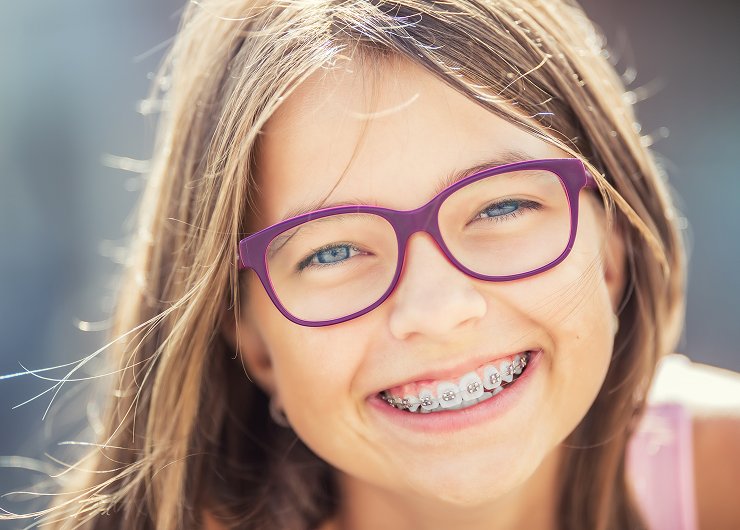
If you’ve been wondering whether braces are the right choice for you or someone in your family, this guide covers what you need to know, from how treatment works to what it costs and who benefits most.
What Are Braces and How Do They Straighten Your Smile?
Braces are fixed orthodontic appliances that use brackets, wires, and bands to gradually move teeth into proper alignment. They remain one of the most reliable ways to correct misalignment, including crowding, spacing, overbites, underbites, crossbites, and open bites. They apply gentle, consistent pressure to shift teeth over time. The results speak for themselves.
Modern braces offer more options than in previous decades. Traditional metal brackets remain a reliable choice for patients of all ages. Self-ligating brackets reduce friction and can make adjustments more efficient. Ceramic braces provide a less noticeable appearance for patients who prefer a more discreet treatment. The right type depends on your clinical needs and personal preferences.
The doctors at Doyle Orthodontics use advanced diagnostic tools to create precise treatment plans for every patient. That starts with CBCT imaging, which provides three-dimensional views of teeth, bone, and jaw structures. Combined with 3Shape 3D scanning technology, this allows our ABO Board-Certified orthodontists to evaluate each case with the clinical depth that complex orthodontic treatment demands. No detail gets overlooked. Every bracket position, every wire adjustment, and every stage of tooth movement is planned with intention before treatment begins.
How Do Braces Work? The Treatment Process Step by Step
Knowing what to expect from braces treatment can help you feel confident about moving forward. Here’s how the process works at our practice, from the first visit through the final result:
- Initial consultation. Your first visit at Doyle Orthodontics includes a thorough examination with CBCT imaging and 3D scanning. Our ABO Board-Certified doctors evaluate your bite, jaw alignment, and tooth positioning to determine whether braces are the right option for you. Same-day consultations are available for patients ready to begin.
- Custom treatment planning. Using articulated models on a jaw-motion simulator, our team develops a treatment plan built around your case and diagnosis. This technology allows us to visualize how your teeth and jaw will move throughout treatment, so every stage is mapped with precision before a single bracket is placed.
- Bracket placement. Once your plan is finalized, brackets are bonded to your teeth and connected with archwires. For qualifying patients, same-day starts mean you can begin treatment during your initial visit. The bonding process itself typically takes about an hour, and most patients describe it as painless.
- Periodic adjustments. You’ll return to our practice every four to eight weeks for adjustments. During these visits, our doctors modify the wires to continue guiding your teeth toward their ideal positions. Each visit builds on the last.
- Retention phase. After active treatment is complete, retainers maintain your results. This phase is essential for protecting the alignment your doctors worked to achieve. Skipping retention is the single most common reason patients lose the progress they gained during active treatment.
According to the American Association of Orthodontists, most braces treatment takes between 12 and 24 months, though individual timelines vary based on case complexity. Some mild cases wrap up faster, while significant bite corrections may take longer.
Key Benefits of Choosing Braces for Orthodontic Treatment
The main benefits of braces include precise tooth movement for complex cases, around-the-clock treatment without compliance requirements, discreet ceramic options, and improved long-term oral health through better alignment and bite function. Here’s a closer look at why braces remain a go-to treatment option.
Braces deliver precise, continuous control over tooth movement. That makes them effective for patients of all ages and most orthodontic concerns. Fixed to the teeth, they work around the clock without relying on patient compliance. Everything from mild crowding to severe malocclusion falls within their range.
Why Are Braces Effective for Complex Cases?
Severe crowding, significant bite issues, and rotated teeth often respond better to braces than other treatment options. The fixed nature of brackets and wires allows for precise control over tooth movement in all three dimensions, including rotation, vertical positioning, and torque. That level of control matters when the case is complicated.
- Because braces are bonded to your teeth, they work 24 hours a day. There’s no need to remember to wear them or worry about losing a removable appliance.
- Discreet options available. Ceramic braces blend with your natural tooth color, making them far less noticeable than traditional metal. Self-ligating brackets also offer a lower-profile appearance.
- Self-ligating brackets can decrease friction between the wire and bracket, which may reduce discomfort and the frequency of adjustment visits. Fewer visits, less soreness.
How Do Braces Improve Long-Term Oral Health?
Properly aligned teeth are easier to clean, reducing the risk of cavities and gum disease over time. A well-coordinated bite also supports comfortable jaw function for years to come.
When teeth fit together correctly, you chew more efficiently and place less stress on individual teeth. These long-term benefits often outweigh the short-term adjustment period that comes with wearing braces.
Braces vs. Clear Aligners: Which Option Is Best for You?
Choosing between braces and clear aligners depends on your orthodontic needs, lifestyle, and treatment goals. Here’s how the options compare:
| Feature | Traditional Metal Braces | Ceramic Braces | Self-Ligating Brackets | Clear Aligners (SureSmile/Angel) |
|---|---|---|---|---|
| Visibility | Most noticeable | Tooth-colored, less visible | Lower profile than traditional | Nearly invisible |
| Case Complexity | Excellent for complex cases | Excellent for complex cases | Excellent for complex cases | Best for mild to moderate cases |
| Compliance Required | None (fixed) | None (fixed) | None (fixed) | High (20-22 hours daily wear) |
| Removability | No | No | No | Yes |
| Adjustment Frequency | Every 4-8 weeks | Every 4-8 weeks | May require fewer visits | Tray changes every 1-2 weeks |
The table covers the basics, but the real decision often comes down to clinical factors that aren’t as easy to chart. A patient with a deep overbite and significant rotation may technically qualify for aligners, but braces give the orthodontist direct mechanical control that produces a more predictable result. The mechanics matter.
On the other hand, a patient with mild spacing and a strong preference for removability may do very well with aligners, provided they commit to wearing them 20 to 22 hours per day.
Each case gets individual evaluation at Doyle Orthodontics. During your consultation, our team will walk through which option can achieve the clinical outcome you’re looking for without compromising results for convenience. The doctors at our practice offer all braces types as well as SureSmile and Angel aligners, so the recommendation is always based on what your case actually needs.
How Much Do Braces Cost? Factors That Affect Your Investment
Braces cost varies based on case complexity, the type of braces selected, and treatment duration. Doyle Orthodontics offers interest-free payment plans, CareCredit financing, and helps maximize out-of-network insurance benefits to make treatment accessible for families.
Case complexity plays the largest role. Patients with severe crowding, significant bite issues, or jaw alignment concerns typically require longer treatment and more frequent adjustments, which increases the overall investment.
The type of braces you choose also factors in. Ceramic braces and self-ligating brackets may differ in price from traditional metal options. Your orthodontist can explain these cost differences during your consultation.
Treatment duration is closely tied to both of the above. A case requiring 24 months of active treatment will naturally cost more than one completed in 12 months.
The team at Doyle Orthodontics provides individualized cost estimates at your initial consultation. The practice offers in-house interest-free payment plans structured for each patient. We also work with patients and their insurance providers to maximize out-of-network benefits. CareCredit financing is available as well.
Treating misalignment now can prevent more costly dental problems later. Untreated crowding can lead to enamel wear that eventually requires crowns or veneers, and those restorations cost significantly more than braces. Bite issues left unaddressed may contribute to jaw discomfort and uneven tooth wear that compounds over time.
Are Braces Right for You? Who Makes a Good Candidate
Good candidates for braces include children as young as seven, teenagers, and adults with crowding, spacing, or bite concerns. Because braces are fixed appliances, they don’t require the same level of daily compliance as removable options, making them a strong fit for most patients and lifestyles.
When Should Children Get Braces?
The AAO recommends an initial orthodontic evaluation by age seven. At that stage, our doctors can identify developing issues with jaw growth, crowding, or bite alignment. Two-phase treatment may begin early for children who would benefit from guiding jaw development before all permanent teeth have erupted. Catching these issues early gives the orthodontist more options and often simplifies later treatment.
Why Is Adolescence an Ideal Time for Braces?
Adolescence remains the most common time for braces treatment. All braces types are available for teens, including ceramic options for those who prefer a less noticeable appearance. Growing bone combined with motivation to complete treatment makes this window effective for many patients.
Adults and Braces: It’s Not Too Late
You’re never too old for orthodontic treatment. Adults represent a growing share of orthodontic patients nationally, and braces work just as effectively for mature patients. Ceramic braces and self-ligating brackets offer discreet options for working professionals. Patients with temporomandibular joint concerns may benefit from the specialized diagnostic approach our ABO Board-Certified doctors bring to complex cases. Adult treatment often addresses issues that were either untreated in childhood or that developed later due to shifting, wear, or changes in jaw function.
Frequently Asked Questions About Braces
How long does braces treatment take?
Most patients wear braces for 12 to 24 months, though treatment duration varies based on case complexity. Mild crowding may resolve more quickly, while significant bite corrections often require the full range. Your orthodontist at Doyle Orthodontics will provide a specific timeline during your consultation based on your diagnostic records.
Do braces hurt?
You may experience mild discomfort for a few days after bracket placement and following adjustments. This tenderness is normal and typically manageable with over-the-counter pain relief. Most patients find that any soreness fades within a week. By the second or third adjustment, many patients report that the discomfort is barely noticeable.
Can adults get braces?
Yes. Braces are effective for patients of all ages. Adult treatment is common, and options like ceramic braces offer a more discreet appearance for those concerned about visibility in professional settings.
What foods should I avoid with braces?
Hard foods like nuts, popcorn kernels, and ice can damage brackets. Sticky foods such as caramel and taffy can pull brackets loose. Chewy foods like bagels and licorice require extra caution. Your orthodontic team will provide a full list of foods to avoid and tips for eating comfortably with braces.
Does Doyle Orthodontics offer same-day braces starts?
Yes. Qualifying patients can begin treatment during their initial visit. The doctors at Doyle Orthodontics use CBCT imaging and 3D scanning to evaluate your case thoroughly, and if braces are the right choice, brackets can often be placed the same day. Not every case qualifies, but many do.
What happens after braces come off?
Retainers are essential for maintaining your results. After active treatment, you’ll wear retainers as directed to keep your teeth in their new positions. Skipping this phase can allow teeth to shift back toward their original alignment, which is why the doctors at Doyle Orthodontics emphasize retention as a critical part of every treatment plan.
Orthodontic treatment is a decision that affects your oral health for years to come. All of our doctors are ABO Board-Certified, bringing advanced training to every case they treat. If braces are on your mind for yourself, your teen, or your child, a consultation with our team can clarify your options and help you understand what treatment will look like. Schedule a consultation to take the next step toward a lasting, healthy smile.